Less coordination
Routine work moves without someone manually pushing every step.
Your workflows, roles, approvals, and systems were designed around what people and software could do at the time.
AI changes what requires a person, what requires a handoff, what needs approval, and what information has to be searched for manually.
But most companies are adding AI to the old way of working instead of redesigning the work itself.
Cambriant redesigns how work gets done so AI changes the business, not just the task.
The first wave of AI adoption has focused on individual tasks.
Draft this faster. Summarize that. Search this. Automate that.
Those gains are real. But the larger workflow often stays exactly the same.
Individual tasks get faster while the company still works the old way.
We start with a different question:
We look at the whole flow of work, not just the task someone wants to automate.
What should disappear? What can happen automatically? What information should already be there? Where does a person actually need to make the call?
Then we put the new way of working into practice.
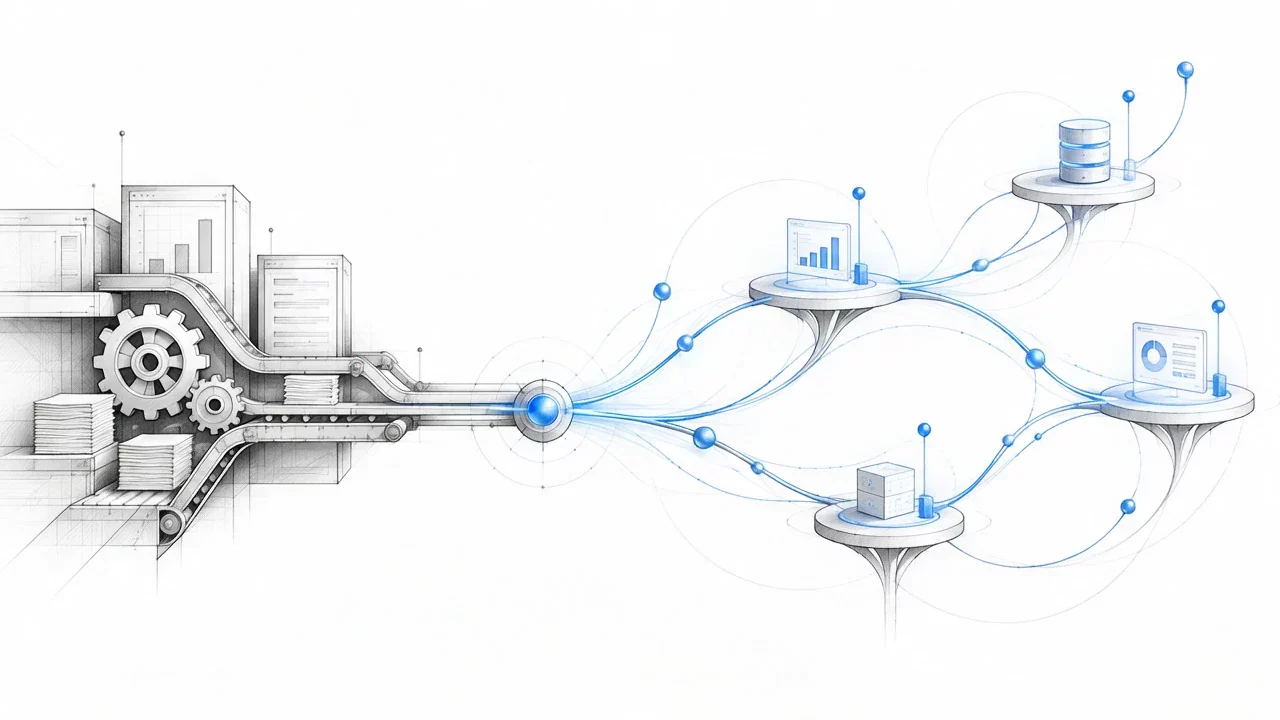
Old workflow
Redesigned workflow
Before we change anything, we agree on what should improve. Then we measure it.
CASE STUDY
We are working with a 30-person custom fabrication company that wants to run with less founder dependence and make more of its operating knowledge transferable.
AI-assisted quoting looked like an obvious opportunity.
But when we mapped the work, we found that 19 of 20 jobs we reviewed had changed after they were quoted.
Those changes were not being measured consistently.
Better AI-assisted quoting would not fix what happened after the quote. Better operating information would.
So we started there.
We do not start with AI. We start with the business.
When the work is redesigned around what AI can do, the change should be visible in how the business runs.
Routine work moves without someone manually pushing every step.
Employees can find precedent and company knowledge without tracking down the person who remembers.
The business can handle more work without adding management and coordination at the same rate.
Did AI change how the work runs, or did it just make one task faster?
Cambriant is led by Ola Rask, an operator who has spent his career building and improving how companies run, including serving as COO of a growing software company through its 2021 exit.
Every engagement is operator-led. When deeper engineering is needed, we bring in specialist technical partners and work alongside your internal team.
We start with the business problem, then use process, software, automation, or AI depending on what will actually make the company run better.
Cambriant is built for established companies where important work crosses enough people, systems, and decisions that coordination itself has become expensive.
That is part of the work.
In a 30-minute discovery call, we learn how the business works today, where time and judgment are being spent, and where redesign could create the most value.
Then we tell you what we would look at first.